April 28, 2009

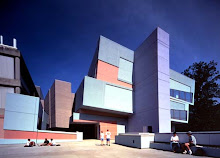
Ozeaneum . German Oceanographic Museum

Architect: Gunther Behnisch
2009 . Stralsund


RATP Bus Centre

Architect: ECDM . Combarel Marrec
2007 . Thiais . France


April 27, 2009

Church of Holy Cross

Architect: Khr
2008 . Jyllinge . Denmark


Architectural School . Val de Seine

Architect: Frederic Borel
2007 . Paris

April 22, 2009

Majoru Sports Ground

Architect: Substance
2008 . Jurmala . Latvia


April 21, 2009

Lio Gallery

Architect: Hilim (Hailim Sub)
2006 . Paju . South Korea


April 20, 2009

Sky Mirror

Sculptor: Anish Kapoor
2006 New York


The Sky Mirror is a mirror from stainless steel polished with 10,7m of diameter located in Rockefeller Center. This installation is lightly elevated regarding the plan of the street, being the convex side orientated for the 5th Avenue, and the concave reflects the tower of the Rockefeller Center.
The object of his attention is the power of transformer of the mirrored surface, enslaving the trasuentes to observe in another way the reality that wraps them, in special his architecture, which distortion checks a new character and value.


O Sky Mirror é um espelho de aço inoxidável polido com 10,7m de diâmetro localizado em Rockefeller Center. Esta instalação está ligeiramente elevada em relação ao plano da rua, sendo o lado convexo orientado para a 5ª Avenida, e o côncavo reflecte a torre do Rockefeller Center. O objecto da sua atenção é o poder transformador da superfície espelhada, cativando assim os trasuentes a observarem de um outro modo a realidade que os envolve, em especial a sua arquitectura, cuja distorção lhes acaba por conferir um novo carácter e valorizar


April 16, 2009

The City


The City, from Mas Yendo

There is a moment of silence when every object is gray and projects grayness.
Before the arrival of dawn,, there is neither light nor shadow, only a void between time and space. A place evolves and decays, at once liberating and repressing us.


Glowing in the dark horizon. Like an insect attracted toward light.
The blinding torch of a city. Pixels of light become windows.
A vertical fortress pulls us towards its pulse. The towering tentacles of the metropolis spit steam into the sky. Its labyrinthine, steel filaments mesh together like roots of an overgrown tree. Back alleys made of refuse; clusters of deteriorated steel boxes, assembled from industrial parts. The streetlights reveal wretched, left-over spaces. Mechanical elements bulge from decrepit structures. Naked pipes wrap around each other in bondage. Loose wires, rusted steel panels, chipped paint, and layered walls capture the essence of the city.


This sinful place does not creep into hiding; it exists. It is emotional, temperamental, irrational, discontinuous; it is as logical as we are. The city embodies memories, events, and anticipation. A manifestation of our lives, ideas, and knowledge, it is trapped by limitations and furthered by possibilities. We cannot help but find ourselves in its destruction and construction, its form and shadow, its ever-changing density and complexity, its pavement and its walls.

Mapa de arquitectura no Porto

In a city that it welcomes of the biggest figures of the Portuguese architecture along his history, and others international, there appeared a space who contributed for his spread, which in this way I share

Numa cidade que acolhe das maiores figuras da arquitectura portuguesa ao longo da sua história, e outras internacionais, surgiu um espaço que contribuí para a sua divulgação, que por aqui partilho

April 08, 2009

Punta Nave Office

Architect: Renzo Piano
1991 . Genova


Perched on the slopes of a hill above the sea, Punta Nave houses the Genova headquarters of the Renzo Piano building workshop
Composed of a system of glass terraces gradually sloping towards the sea, the building recalls the shapes of the greenhouses typical of the Ligurian coastline.
Zenital light plays here a major role: Photosensitive skylights regulates light intensity thus pervading the interior spaces with natural light.

by Renzo Piano

Localizada ao longo de uma encosta sobre o mar mediterrâneo, a sede do gabinete do arquitecto Renzo Piano em Génova caracteriza-se por uma distinta espacialidade, em que o edifício é desenvolvido em sucessivos mezzanines que a vão gradualmente descendo.
Com o revestimento das fachadas em vidro, e o corpo do edifício extenso e de altura linear, a sua forma acaba por fazer uma analogia às estufas que se estendem ao longo de todo aquele território.
O papel tecnológico a que as suas obras frequentemente se associam, aqui é manifestado pelo controlo da iluminação zenital com reguladores fotosensíveis que controlam a intensidade da luz de forma a permitir que os espaços interiores recebam sempre luz natural.


April 07, 2009

Lelystad Theatre Agora

Architect: UN Studio
2007 . Lelystad


The design of the theatre explores the integration of theatre arts and new media into sculptural form. The building’s envelope is composed of an overlapping multi-faceted surface that, because of perforations, creates a moiré or kaleidoscopic effect. Internally the vertical foyer and its grand staircase is designed as an element that carves through the center of the building’s volume, clearly delineating trajectories and orientation with the interconnecting theatres and congress hall

By Ben Van Berkel


April 06, 2009

Kongsberg Jazz Festival Tubaloon

Architect: Snohetta
2000 Kongsberg . Norway


The Tubaloon is a unique pneumatic tension membrane structure designed to serve the main stage at Scandinavia's reputable Kongsberg Jazz Festival.
Mouting, dismouting and storage of the structure have been optimized to allow for its annual festival appearence at its historic hilltop site.
The structure type is hybrid , featuring a continuous 1m diameter pneumatic perimeter tube that rests against a thin galvanised steel frame and provides even distribution of the tension to the large hour-glass-shaped central membrane. White Ferrari PVDF coated PVC fabric was chosen for its durability and responsiveness to effects from lighting. The hybrid structure results in a form that is more voluminous and shapely than pure membrane structures and it give the impression that the tubaloon is an organism rather than just skin.

by Snohetta


March 23, 2009

Julián Bonder . Memoriais

Um memorial que presta homenagem às vítimas de uma tragédia, pode ser o espaço público para iniciar um diálogo sobre o passado? Esta é a pergunta lançada, a partir de um estudo realizado por Julián Bonder, e que pode ser acompanhado na integra - em espanhol - no espaço 12 Angulos.

"Cualquier artista puede trabajar como quiera, pero para mí, cuando uno trabaja al servicio de otros, lo más importante es que invite a los demás al espacio.
Un memorial no es un lugar para que vengan a ver la obra del artista, si no para que a través de ella se vean ellos mismos.
(...)
Creo que los monumentos que no generan nada van a pasar al olvido. Sin dejar de lado el respeto que merece todo artista y su obra, es importante aceptar y entender que la obra no termina, sino que empieza, cuando se instala. Si hay gente gritando frente a un memorial, significa que este generó algo. Prefiero eso que un monumento invisible.
(...)
¿Una obra puede ser un lugar de reconciliación?
El tema es cómo se invita a las voces diversas a la discusión. Dejando claro que es imposible equiparar moralmente a quien fue víctima de quien mató, tenemos que entender que un espacio público no puede resolver un conflicto, pero sí dar lugar para que parte de este se ponga sobre la mesa. (Por Kurth Mendoza) "

by Julián Bonder in 12 Angulos

March 18, 2009

Mourning House

Architect: Pascal Arquitectos
2006 Mexico City


This is a project with very strong emotional implications. We had to understand the mood of the user, who at such this moment would not care very much for an aesthetical analisis of any place, but at the same time we wanted to create a space that can create a spritual mood, for this we refered to ancient buidings that were designed for this purpose, as the Egiptian “Mastabas” or some Mayan buildings in Palenque.

Religious rules and buildings codes in the Jewish Religion are very strict for this kind of places, and we were guided by several groups of Rabbies for this matter.


A project of this nature must encourage introspection and peaceful visual harmony through a discrete use of materials and lighting. The construction is located in a residential area and being planned as an isolated construction from the sorroundings, an indoor illuminated yard was built. The building façade is completely covered by Grissal flamed granite.


The building welcomes de visitor with a 6´4” wide and 30´ high triangular shaped wooden door which leads to an access tunnel in the same shape, creating a solemn atmosphere as you enter. This darkening experience at the entrance ends when the hallway opens to a large, double height granite hall illuminated by the northern light coming from the indoor courtyard with a tall Dracaena at the center and a symbolical abstract sculpture by artist Saul Kaminer as the only artwork piece for decoration. No furniture was used inside this place, only a floating bench surrounding the room, that is made out of the same wood used in all the builging. It also serves to hide all of the air conditioning, speakers and recesed lighting which adds a dramatical touch. This way the rooms shown no added ornament but the light and shapes playing on the granite volumes. The ceiling is made of dark cumaru wood and floats without touching any wall and a skylight puts a highlight on this detail.


by Pascal Arquitectos


February 27, 2009

Web of North

Architect: Kas Oosterhuis
2002 . Haarlemmermeer


The Web of North-Holland made a successful soft landing on the Floriade World Exhibition site in the Haarlemmermeerpolder in the Netherlands. The Web is designed in the weightless space of the computer. First in the execution phase ONL unleashed gravity as an active force working upon the 3d model. ONL has sculpted the 3d model, sculpting the data of the kneadable substance like digital clay. A variety of techniques have been used: output using the milling machine, input with the 3d digitizer, modelling with a digital surface sculpting tool.


Twisted icosahedron. Started from the chosen sixfrequent icosahedron grid, ONL has invented an absolutely new structural principle: a 3d triangular grid of flat and folded steel plates connecting the weighed normals, which are the lines perpendicular to the surface of the nurbs model as directed to the inside. ONL realized the hotline between the digital 3d model and the steel manufacturer. ONL wrote in-house an Autolisp routine which extracts the elements from the 3d model, places them on a reference plane, flattens them and attaches the relevant data. Buckling points and angular rotations are administrated in a database. All elements are unique in shape and thickness.


It is important to apply a transparent coding system for production and assembly purposes. In this process the 2d drawing plays no role. It is a file to factory process where the digital 3d model of the designer communicates directly with the programmable cutting machines of the steel manufacturer


Generic concept leads to specific result. The innovative steel structure can follow in principle each possible double curved shape. In this respect the ONL invention is of generic value for the building industry at large. The clue is to turn the exception into the norm. Providing solutions for mass customization, and responding to forces in nowadays society commanding individualisation of the production process.


The Web has been assembled as a 1:1 mock-up in the workshop of the steel manufacturer. Then after 3 weeks it has been taken apart, coated, transported and assembled on-site.


Paper thin skin. A similar file to factory procedure has been followed for the production of the triangular ultralight Hylite aluminium panels. No triangle is the same, there is no repetition. The soft-edged triangular panels are folded over the curved exterior contours of the steel structure. Hylite is a very elastic 2mm thin composite and is capable of absorbing internal forces in the surface. These material characteristics have formed the basis of the ONL design for the robust construction in relation to the seemingly fragile but vandal proof paper thin skin

by Kas Oosterhuis


National Cold War Museum

Architect: Feilden Clegg Bradley
2006 . Cosford


This building houses the UK’s national exhibition dedicated to documenting the Cold War. The Royal Air Force Museum wished to raise their profile with a landmark building to house a collection of rare and unique aircraft, including 13 Cold War bombers with wingspans stretching up to 50 metres.

The design gives physical expression to the two opposing forces locked in the Cold War. Two curvilinear triangular volumes are forced 30 metres up out of the ground creating a 130 metre long ‘fault line’ along their adjoining edges with the metaphor continued in the twisted plane geometry of the roof. The display hall is split onto two levels with high level viewing access to provide multiple views of the museum’s collection.


A simple and strong statement is achieved through the combination of large enclosure, dramatic gesture, robust materials and the technology required to produce an environmentally sustainable solution. The project represents a real shift in thinking on museum environmental conditions. Humidity is controlled within the 6,200 sq metre display hall without using energy intensive air conditioning but through controlled ventilation, low level conservation heating, exposed thermal mass and a heavily insulated roof structure.


The smooth lines of the aluminium standing seam roof dominate the sculptural form of the building’s exterior. The industrial aesthetic of the interior is one of stark contrasts: dark structural steel supports bright galvanized decking while daylight entering via a continuous strip of rooflights along the central spine provides a constantly changing dynamic of lights and darks. The ancillary facilities, including an auditorium and classrooms, are buried in the ground below and continue the expression of contrasts with exposed concrete block work walls with black timber joinery

by, Feilden Clegg Bradley

Villa Engstrom

Architect: Ralph Erskine
1956 . Liso . Nynashamn


Villa Engström, também conhecida como a Cúpula, é uma vivenda em Lison na costa do Báltico, a cerca de dez quilômetros a oeste de Nynäshamn.

A casa foi projectada pelo arquitecto Ralph Erskine e construída durante os anos 1955 a 1956. Na Villa Engström viu Erskine ideias sobre uma atmosfera especial de expressão nórdica, sendo então a habitação envolvida sobre uma cúpula de 16 metros, e cuja forma nos remete para um imaginário extra-planetário, em que um dos seus elementos desembarcou na costa.
O interior do edifício é dotado de uma grande densidade e cuja organização é muito marcada pela luz zenital, cujas aberturas são algumas vezes revestidas a Plexiglass. O revestimento da fachada, é num metal de cor azul que procura fazer a simbiose entre a terra e a água, como Erskine referiu, "harmonizar o arquipélago com pedras arredondadas".


Saint Denis Police Station

Architect: X-TU
2006 . Saint Denis . Paris


February 12, 2009

Centre Choregraphique National

Architect: Rudy Ricciotti
2006 - Mairie d'Aix en Proven
ce


Built in a narrow share of 38 meters for 15, for an extensive program, the idea of project passed for guaranteeing the totally free inner space being the structure put in the periphery of the building, giving to the front an ambiguous character, for the play between the crossed structure and the envelope.
The auditorium is situated in the floors more low, whereas the school of dance is prepared in the floors superior being in this zone the building covered by a second totally glazed front. The administration is situated in the floor of entry


Construído num lote estreito de 38 metros por 15, para um extenso programa, a ideia de projecto passou por garantir o espaço interior totalmente livre sendo a estrutura colocada na periferia do edifício, dando à fachada um carácter ambíguo, pelo jogo entre esta estrutura cruzada e o revestimento, tudo construído em betão.
O auditório situa-se no piso inferior, enquanto que a escola de dança se dispõe nos superiores sendo nesta zona o edifício revestido por uma segunda fachada totalmente envidraçada. A administração situa-se no piso de entrada.


Juhani Pallasmaa

Excerto de uma entrevista a Juhani Pallasma de 12 de Agosto de 2006, no suplemento Babelia do El País. Toda a entrevista pode ser acompanha a partir do link das Entrevistas, Juhani Pallasma . Viver Cidades


Anatxu Zabalbeascoa: Neste livro, o Sr. tacha de 'narcisistas' e 'niilistas' muitos dos ícones arquitetônicos celebrados pela crítica. É isto o que pensa da arquitetura contemporânea ?

Juhani Pallasmaa: Sim. A arquitetura atual tende a ser 'retiniana', pois se dirige aos olhos; é 'narcisista' porque coloca a ênfase no arquiteto, no indivíduo; e é 'niilista' porque não fortalece as estruturas culturais; ao contrário, as aniquila. Hoje, um pequeno grupo de arquitetos constrói em todo o mundo, e os mesmos edifícios estão em toda parte. Assim, é difícil que a Arquitetura possa reforçar alguma ou qualquer cultura.

Zabalbeascoa: O Sr. considera que a 'arquitetura de ícones' não possui nenhum componente social ? Os monumentos não singularizam as cidades ?

Pallasmaa: Creio que a idéia de um monumento referencial está sendo muito explorada hoje. De tal modo que serviria para justificar qualquer 'proeza'. Mas temo que este tipo de Arquitetura serve a fins muito egocêntricos e limitados, ao contrário de uma Arquitetura que se ancore [ancle] nos seres humanos do mundo, ao invés de impor sua presença. A Arquitetura de hoje se descuidou dos sentidos, mas não é só isso que explica sua desumanidade [inhumanidad]. Ela não é feita para as pessoas. Tem outros objetivos, alheios ao uso pelos cidadãos. De tal modo que a Arquitetura se tornou uma arte visual. E, por definição, a visão te exclui do que estás vendo. Vê-se desde fora, enquanto que a audição envolve-te no mundo acústico. Nesta linha de raciocínio, a Arquitetura deveria envolver através da tridimensionalidade. O tato nos aproxima do tocado. Por isso, uma arquitetura que enfatiza a visão nos deixa 'fora de campo'.

Zabalbeascoa: Existe um responsável pelo fato dos edifícios serem hoje produtos visuais ?

Pallasmaa: Isto é uma conseqüência da 'comercialização' do mundo: tudo é negócio. E também resulta da 'velocidade' do mundo: tudo tem que ser rápido e instantâneo [al momento]. Ademais, há um 'excesso', de todas as coisas [hay demasiado de todo]. Sobretudo de 'informação'. Se quiseres angariar atenção, tens que falar alto. Isto explica o tipo de arquitetura que temos, em contraposição às catedrais: elas contrastavam com o mundo, mas convidavam a um encontro íntimo.
...
Pallasmaa: Acho que isto se deve à tradição luterana da minha formação. Sem ser religioso, sou nórdico. Venho de uma cultura restritiva, que não nos incita a destacar-se do todo. Nela, 'o melhor' é 'o que pertence ao grupo', pela atitude, pelo comportamento ou pelo aspecto. Assim, o maior elogio que se pode fazer a um arquiteto finlandês é comentar que se 'comporta bem', não que 'se destaca'.